Discover the world. Create memories that last a lifetime.

Travel guides, hidden gems, and smart itineraries to help you explore better.
Amsterdam for the First Time: A Complete Travel Guide to the Netherlands’ Most Atmospheric City

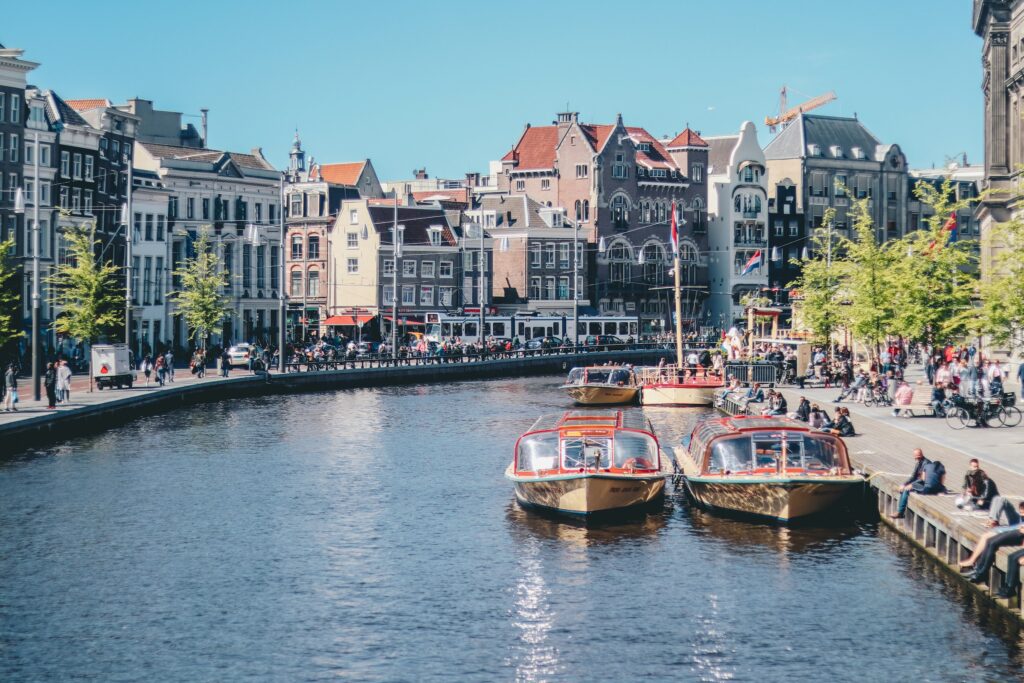
Few cities in Europe feel as instantly recognizable as Amsterdam. Long before arriving, most travelers already imagine the canals, bicycles, narrow houses, and warm café lights reflecting on the water after sunset. Yet what surprised me most when visiting Amsterdam for the first time was how much calmer and more intimate the city felt in reality.
Despite its global reputation, Amsterdam rarely feels overwhelming in the way many major capitals do. The streets are smaller, movement feels slower, and even busy areas somehow maintain a sense of quiet balance. Walking through the city doesn’t feel like navigating a crowded destination. It feels more like gradually settling into a rhythm that already existed long before you arrived.
What makes Amsterdam memorable isn’t only its landmarks. It’s the atmosphere between them — the sound of bikes crossing bridges early in the morning, boats moving slowly through the canals, locals sitting beside the water without seeming rushed, and the feeling that daily life here unfolds at a more human pace.
For first-time visitors to Europe, Amsterdam offers something that can be surprisingly difficult to find: a capital city that feels lively and peaceful at the same time.
Articles Recommended:
- Prague for the First Time: A Complete Travel Guide to the City of a Hundred Spires
- Vienna for the First Time: A Complete Travel Guide to Austria’s Most Elegant City
First Impressions of Amsterdam
The first thing that stood out to me in Amsterdam was the pace of the city. Everything moves differently here.
Bicycles dominate the streets, but not in a chaotic way. People move confidently and naturally through the city, as if everyone already understands an unspoken rhythm. Cars feel secondary, and even the busiest areas rarely feel aggressive or loud.
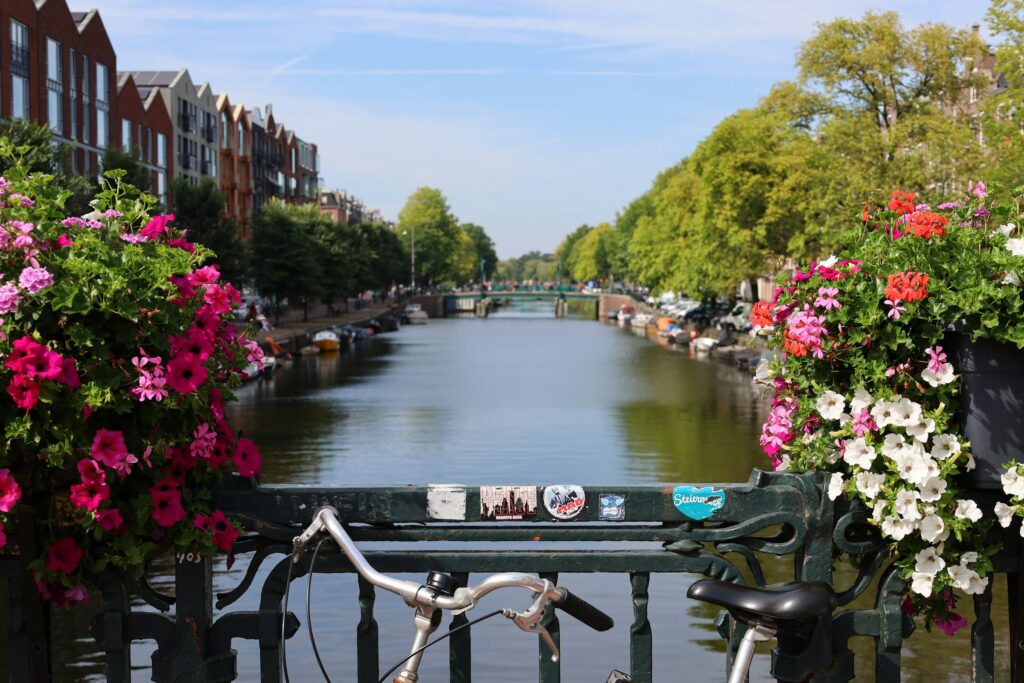
The canals shape nearly everything about the experience. They divide neighborhoods naturally and create a sense of openness that changes how the city feels from one moment to the next. Every few minutes, another bridge appears, another row of leaning canal houses reflects on the water, and another quiet street seems to lead somewhere unexpectedly beautiful.
At first, Amsterdam can feel slightly disorienting because so much of the city looks visually similar. But after a while, that confusion becomes part of the charm. I found that the more I stopped checking maps and simply walked, the more enjoyable the city became.
That’s really when Amsterdam starts to reveal itself.
What Makes Amsterdam Feel Different
Many European cities impress visitors with scale. Amsterdam does the opposite.
Its beauty feels more subtle and immersive. Instead of relying on grand monuments or enormous boulevards, the city creates an atmosphere that slowly pulls you in through details. A random canal street can feel just as memorable as a major attraction. A small café beside the water can end up becoming one of the moments you remember most from the trip.
What struck me most was how consistently beautiful everyday life felt here. Flower boxes hang above the canals, locals sit outside cafés regardless of the weather, and even ordinary residential streets feel carefully lived in rather than simply maintained for tourism.
Amsterdam also balances history and modern life unusually well. Seventeenth-century buildings stand beside minimalist cafés, creative studios, and contemporary design shops without the city ever feeling forced or artificial. Nothing feels overly polished. It feels real.
And that authenticity is what gives Amsterdam its personality.
Articles Recommended:
- Rome for the First Time: A Complete Travel Guide to Italy’s Eternal City
- Budapest for the First Time: A Complete Travel Guide to Hungary’s Most Captivating City
Exploring Amsterdam’s Neighborhoods
Amsterdam is best understood slowly, through its neighborhoods rather than through a strict itinerary.
The Canal Belt naturally becomes the starting point for most visitors. Walking there early in the morning, before the city fully wakes up, was one of the moments that stayed with me most. The canals become almost silent, the reflections sharpen, and the entire city feels softer.
Jordaan has a completely different energy. The streets feel narrower, quieter, and more personal. Small cafés spill onto the sidewalks, bicycles lean against bridges, and everyday life feels visible in a way that many larger cities lose over time. It’s easy to spend hours there without feeling the need to “do” anything specific.
De Pijp feels younger and more energetic, with busy terraces, food markets, and a more contemporary atmosphere. At the same time, it still feels connected to the rest of Amsterdam rather than separated from it.
What I appreciated most is that every neighborhood changes the mood of the city slightly without making Amsterdam lose its identity. Everything still feels connected through the canals, the architecture, and the rhythm of daily life.
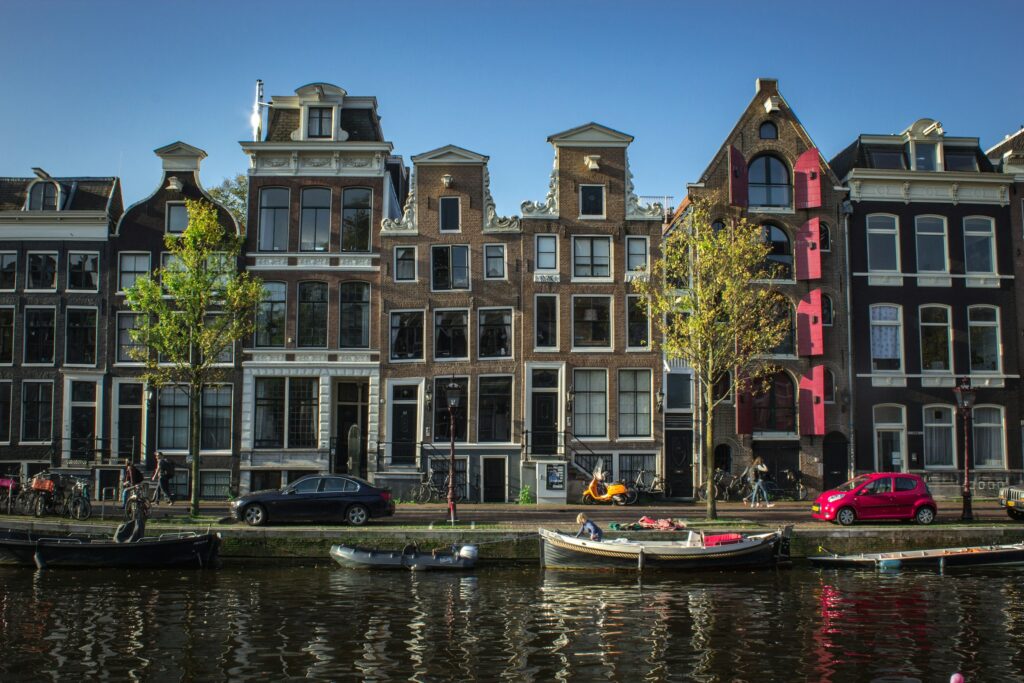
Canal Life and the Rhythm of the City
The canals are far more than scenery. They completely shape how Amsterdam feels.
During the day, they create openness and movement throughout the city. Boats pass quietly, reflections shift constantly with the light, and bridges frame nearly every view. But it’s during the evening that the atmosphere changes most noticeably.
As the sun begins to disappear, lights from homes and cafés reflect across the water, and the city becomes calmer without feeling empty. Walking beside the canals at night was probably when Amsterdam felt most memorable to me. There’s a softness to the city after dark that’s difficult to describe properly until you experience it yourself.
One of the best parts of Amsterdam is that you rarely feel pressured to rush between places. The city encourages slower movement naturally. Even without a plan, simply walking beside the canals for an hour can feel like a complete experience on its own.
Articles Recommended:
- Tokyo for the First Time: A Complete Guide to Japan’s Most Dynamic City
- A Foodie’s Guide to Barcelona: What to Eat and Where to Start
Food, Cafés, and Everyday Atmosphere
Amsterdam’s food scene reflects the city itself: international, relaxed, and unpretentious.
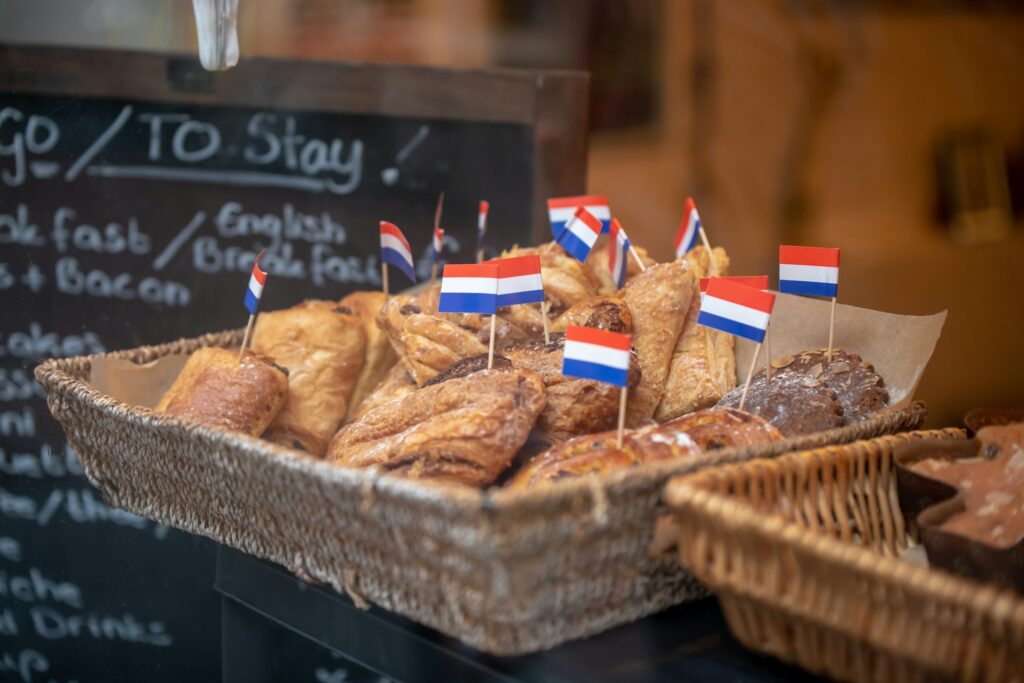
Traditional Dutch foods still play a role, but the city’s identity is shaped just as much by Indonesian, Surinamese, Turkish, and broader international influences. Markets, bakeries, and small neighborhood cafés often feel more memorable than formal restaurants.
What stood out to me most wasn’t necessarily the food itself, but the atmosphere surrounding it. People stay in cafés for long periods without feeling rushed. Conversations continue slowly. Terraces remain full even in colder weather.
There’s a feeling that daily life in Amsterdam happens outdoors whenever possible. Along canals, beside cafés, in parks, or simply sitting near the water. That openness gives the city a sense of calm that quietly affects your entire experience there.
Museums, Creativity, and Culture
Amsterdam’s artistic identity feels deeply connected to the city rather than separated into tourist attractions.
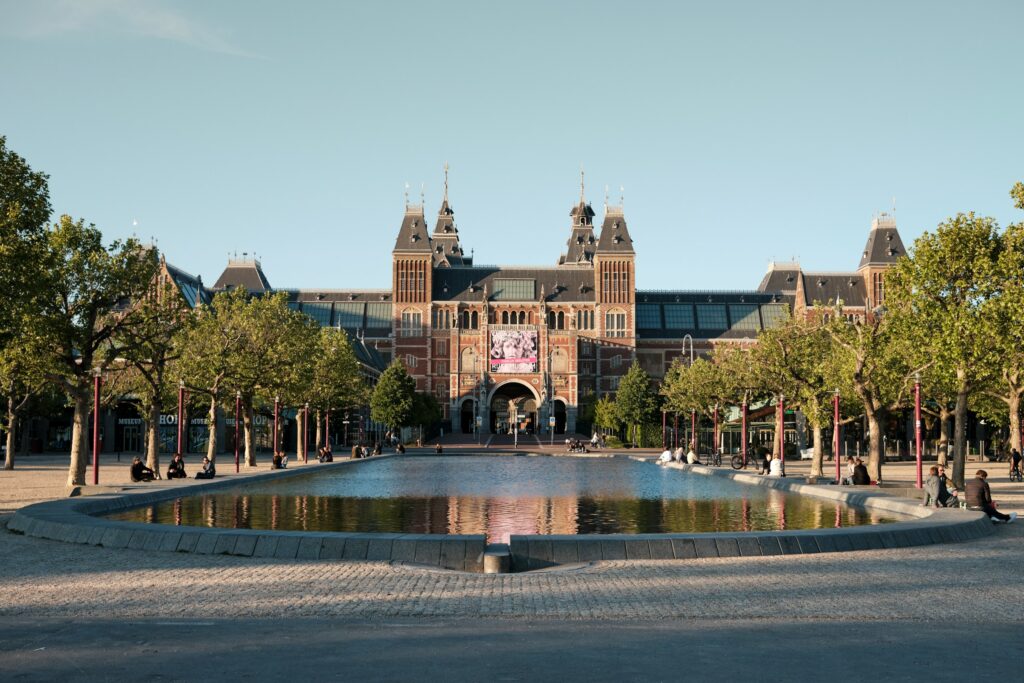
The Rijksmuseum and Van Gogh Museum are obviously impressive, especially for first-time visitors, but creativity in Amsterdam extends far beyond museum walls. Bookstores, design studios, photography galleries, vintage shops, and small independent spaces appear naturally throughout the city.
The Anne Frank House leaves a very different kind of impression. Visiting it changes the emotional tone of the trip for many people, adding historical depth to a city that can otherwise feel very light and relaxed.
What makes Amsterdam interesting culturally is that art and history never feel isolated from daily life. They exist alongside cafés, canals, bicycles, and ordinary neighborhoods in a way that feels integrated rather than staged.
Articles Recommended:
- The First Time I Got Lost in Europe (And Why It Was the Best Thing That Happened)
- What Europe Feels Like on Your First Trip (Beyond the Photos)
Is Amsterdam Easy for First-Time Visitors?
Amsterdam is one of the easiest European capitals to experience comfortably for the first time.
The city center is compact, English is spoken almost everywhere, and walking between neighborhoods feels manageable. Public transportation is efficient, though honestly, I found myself walking most of the time because the city simply feels better that way.
The only adjustment visitors usually need is learning how to navigate around cyclists. Bike lanes move quickly, and locals expect people to pay attention. After a day or two, though, even that starts to feel natural.
What makes Amsterdam especially approachable is how quickly you settle into the city’s rhythm. Within a short time, the streets stop feeling unfamiliar and start feeling intuitive.
How Many Days Should You Spend in Amsterdam?
For a first visit, three to five days feels ideal.
That gives enough time to experience the historic center, museums, neighborhoods, and canal atmosphere without turning the trip into a checklist. Amsterdam works best when you leave room for unplanned moments — longer walks, slow mornings, or afternoons spent sitting beside the water without much urgency.
The city rewards flexibility more than efficiency.
Some of my favorite moments there came from having nowhere specific to be.
Articles Recommended:
- Why Traveling Europe Changed the Way I See the World
- How to Plan a 2-Week Europe Itinerary (Step-by-Step)
Final Thoughts
Amsterdam leaves a different impression on everyone, but for many first-time visitors, what stays strongest is the atmosphere itself.
It’s not just the canals or the architecture. It’s the feeling of moving through a city that seems designed around balance — busy but calm, historic but modern, international but deeply local at the same time.
Amsterdam doesn’t ask you to rush through it. In many ways, it teaches you not to.
And that’s ultimately what makes the city feel memorable long after the trip ends.
Written & updated by Matteo — Travelupo
