Discover the world. Create memories that last a lifetime.

Travel guides, hidden gems, and smart itineraries to help you explore better.
The Perfect 7-Day Mallorca Itinerary: Beaches, Villages and Scenic Drives


Mallorca offers far more than beach resorts. Beyond the coast, you will find medieval towns, mountain villages, fishing harbours and some of the most beautiful landscapes in the Balearic Islands.
I think seven days is ideal for a first visit. This itinerary combines Palma, the Serra de Tramuntana, northern Mallorca and several relaxed stops beside the sea.
For the easiest trip, I recommend staying in Palma for two nights before moving to Sóller, Alcúdia or Port de Pollença.
Day 1: Arrive in Palma and Explore the Old Town
I would begin in Palma, Mallorca’s elegant capital. Starting here makes the trip feel easy, especially after a flight, because you can explore on foot without collecting a rental car immediately.
After arriving at Palma de Mallorca Airport, check into your accommodation and spend the afternoon exploring. The historic centre is compact and easy to discover on foot.
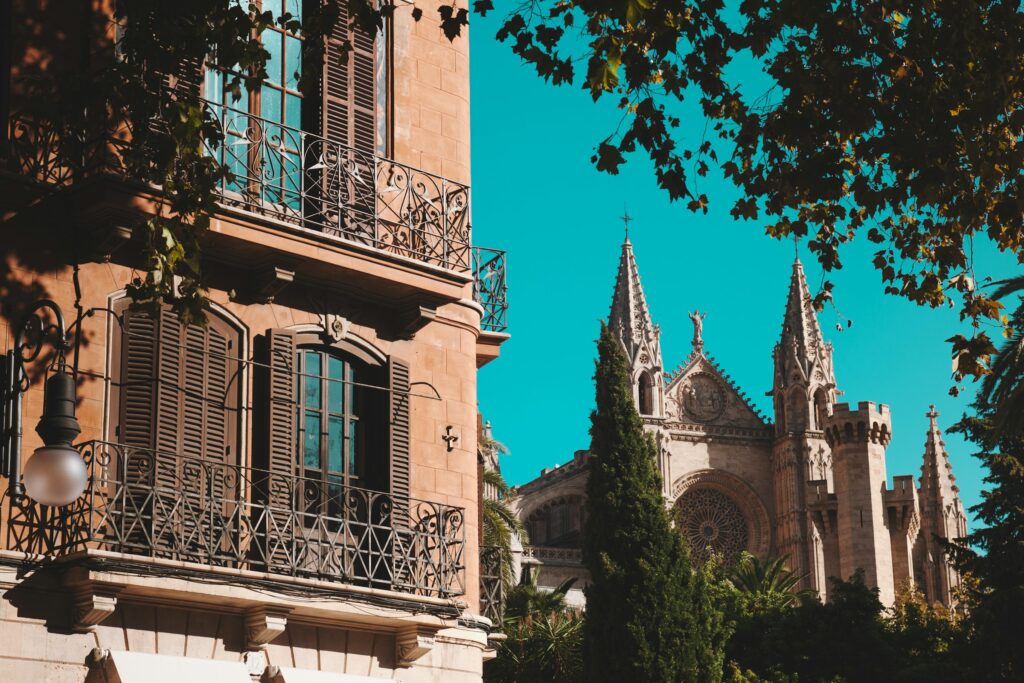
Start at Parc de la Mar, where you will get one of the best views of Palma Cathedral. Known locally as La Seu, the cathedral dominates the waterfront and looks especially beautiful in the late-afternoon light.
From here, wander through the Old Town towards the Royal Palace of La Almudaina, Plaça Major and Passeig del Born. Some of Palma’s best corners are discovered without a strict route.
For dinner, head to Santa Catalina. The neighbourhood has a relaxed evening atmosphere and is a good place to try local dishes such as pa amb oli, tumbet or sobrasada.
Articles Recommended:
- European Islands That Feel Like Summer Without the Crowds
- Where to Travel in Europe in October 2026: 12 Incredible Autumn Destinations
Day 2: Palma Cathedral, Bellver Castle and the Waterfront
Your second day is the best time to visit Palma’s main landmarks. I would keep the morning focused on the historic centre and save the castle and waterfront for later, when you are ready to move beyond the Old Town.
I recommend entering Palma Cathedral early in the morning, before the area becomes busy and the temperature rises. The interior is just as impressive as the exterior, with Gothic columns, colourful stained glass and a vast central nave.
Afterwards, walk towards the Arab Baths. The site is small, but the peaceful garden and historic architecture make it a worthwhile stop.
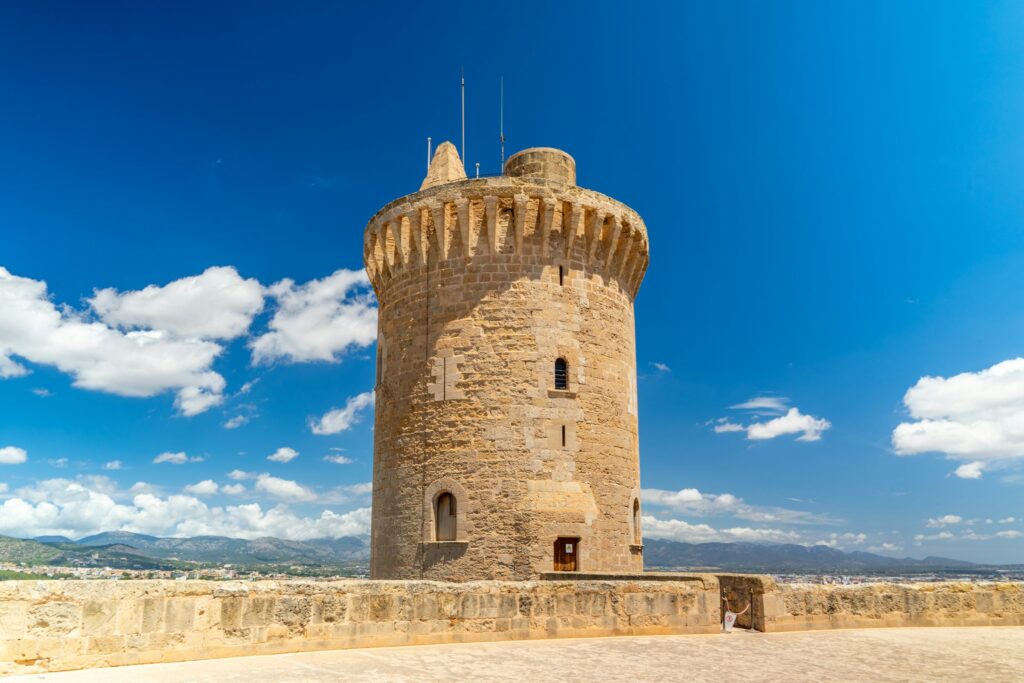
After lunch, travel to Bellver Castle. Its unusual circular design and hilltop location provide panoramic views over Palma and the harbour.
Later, return to the waterfront for a swim at Can Pere Antoni or a walk along the marina.
Day 3: Valldemossa and Deià
On day three, leave Palma and travel into the Serra de Tramuntana. This is the point where the itinerary begins to feel completely different, replacing city streets with olive groves, stone villages and winding mountain roads.
For me, Valldemossa is one of the best introductions to Mallorca’s mountain villages. It is surrounded by green hills and filled with stone houses, flower-covered lanes and traditional green shutters.
Arrive in the morning, walk through the centre and visit the Royal Carthusian Monastery. Before leaving, try a coca de patata, a soft local bun.
Continue towards Deià, following one of the most scenic roads on the island. Deià is small, but its setting makes it unforgettable. Honey-coloured buildings rise above olive groves, with the mountains behind them and the Mediterranean in the distance.
Walk through the village and climb towards the church for a wider view over the landscape.
Cala Deià is also worth considering, although parking is limited and the access road is narrow.
Articles Recommended:
- European Beach Destinations That Shine in September 2026
- 10 Best European Destinations to Visit in August 2026
Day 4: Sóller and Port de Sóller
Spend day four exploring Sóller and Port de Sóller. I like this combination because it gives you a traditional inland town and a relaxed coastal stop without requiring a long journey between them.
One memorable way to reach Sóller is on the historic wooden train from Palma. By car, it is usually easier to park outside the historic centre.
Begin in Plaça de sa Constitució, Sóller’s main square. The Church of Sant Bartomeu overlooks the cafés, while the historic tram passes directly through the centre.
Sóller is surrounded by citrus groves, so this is the perfect place to try fresh orange juice or a citrus dessert.
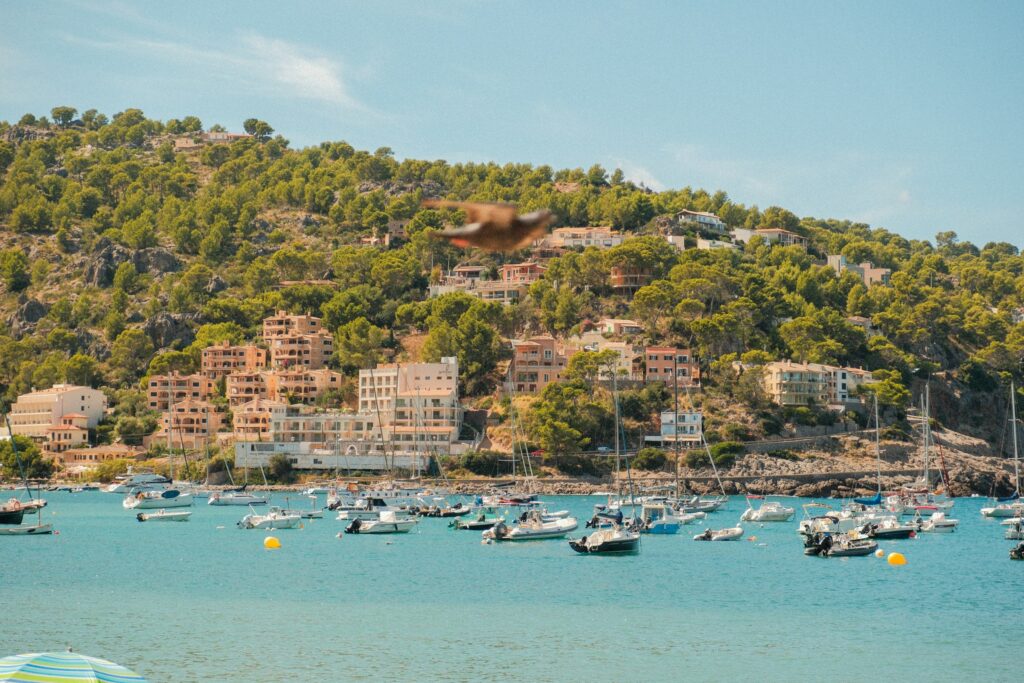
After exploring the town, take the tram to Port de Sóller. Spend the afternoon walking along the bay, relaxing on the beach or having lunch beside the water.
I would stay until late afternoon, when the harbour feels calmer and the light over the mountains becomes softer.
Day 5: Serra de Tramuntana Scenic Drive
Day five is dedicated to the Serra de Tramuntana, one of the highlights of any Mallorca itinerary. Keep the schedule flexible, as you will probably want to stop more often than expected for photographs and viewpoints.
Start early and follow part of the Ma-10, the scenic mountain road that crosses the northwest of the island.
Begin in Fornalutx, a stone village known for steep lanes and terracotta rooftops. Continue towards the Cúber and Gorg Blau reservoirs, where limestone peaks and deep valleys dominate the landscape.
From here, continue towards Lluc and its peaceful mountain monastery.
Confident drivers can continue to Sa Calobra. The road is famous for its tight bends and steep descent towards the sea. It is spectacular, but it can feel demanding during busy summer days.
At Sa Calobra, a path through the rock leads to the dramatic Torrent de Pareis. Avoid adding too many stops, as mountain roads take time.
Articles Recommended:
- European Beach Destinations with Crystal-Clear Water for a Perfect Summer Escape
- European Summer Destinations to Visit in July
Day 6: Alcúdia, Pollença and Cap de Formentor
Travel to northern Mallorca for a day of historic towns and coastal scenery. This is one of the fullest days in the itinerary, so I recommend starting early and avoiding a long lunch stop.
Start in Alcúdia Old Town. Walk through its cobbled streets and climb onto the medieval walls for views over the rooftops.
Continue to Pollença and climb the 365 Calvari Steps leading to a small chapel.
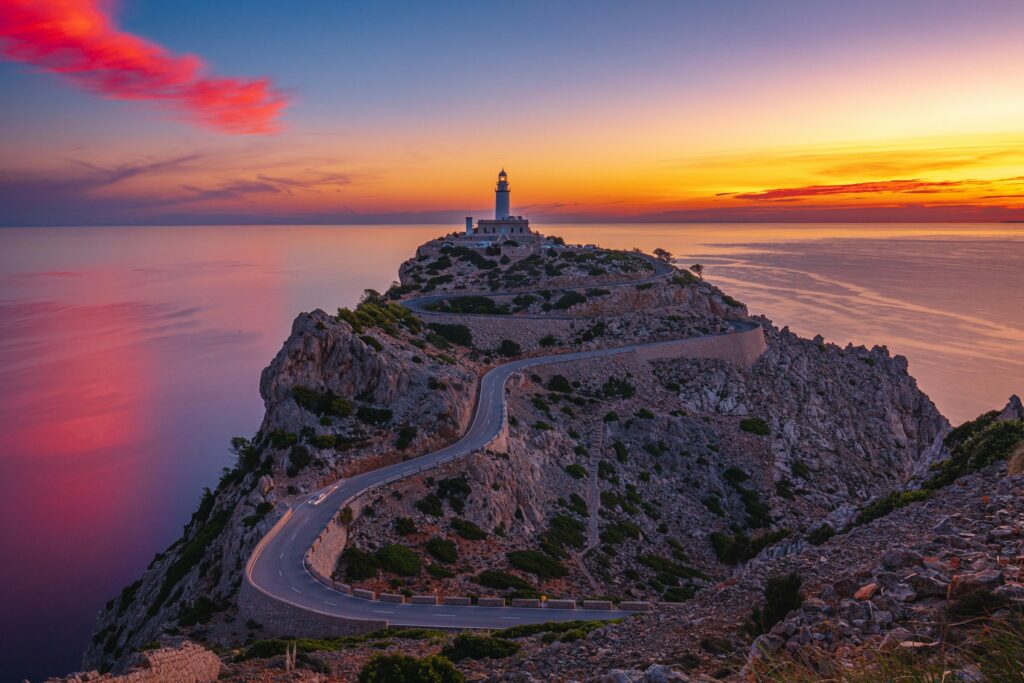
After lunch, drive towards Port de Pollença and the Formentor Peninsula.
Stop at Mirador Es Colomer for views across steep cliffs and the Mediterranean.
Depending on seasonal road restrictions, continue towards Formentor Beach or the lighthouse. Access rules can change during the busiest months, so check the latest official information before travelling.
Day 7: Santanyí, Cala Figuera and Mondragó
Finish your week in southeastern Mallorca. After several busy sightseeing days, this final route is intentionally slower and leaves plenty of time for the beach.
Begin in Santanyí, a peaceful golden-stone town, and stop for coffee in the centre.
Continue to Cala Figuera, a fishing village of boat houses and white buildings arranged around a narrow inlet.
Follow the harbour paths before travelling to Mondragó Natural Park.
The park is home to Cala Mondragó and S’Amarador, two clear-water beaches connected by walking trails. Spend your final afternoon swimming or relaxing beneath the pines.
During summer, I recommend arriving early because nearby car parks can fill quickly.
Articles Recommended:
A Few Practical Tips
Book accommodation and rental cars early if you are travelling in July or August. Carry water on mountain days, avoid relying on journey times shown on a map and arrive at popular coves before late morning.
I also recommend checking road restrictions and attraction opening times shortly before each day trip, as seasonal arrangements can change.
Where to Stay in Mallorca
Palma is the best base for the first two days. Sóller suits the Serra de Tramuntana, while Alcúdia or Port de Pollença works well for northern Mallorca.
I would split the week between Palma and one of these areas to reduce driving.
Do You Need a Car in Mallorca?
You do not need a car in Palma, but I recommend renting one for the second half of the itinerary.
It makes mountain viewpoints, villages and remote beaches much easier to reach. Collect it after leaving Palma, where parking can be inconvenient.
The Best Time to Visit Mallorca
May, June, September and early October are ideal. The weather is warm, crowds are lighter and driving is easier.
July and August offer the hottest beach weather but also the busiest roads and coves. Spring is excellent for sightseeing, while early autumn brings warm sea temperatures.
Final Thoughts
Seven days gives you enough time to experience Mallorca beyond its famous beaches.
My main advice is not to plan every hour. Leave space for an unexpected viewpoint, a quiet café or a spontaneous swim, and allow the island’s slower rhythm to shape the journey.
Written & updated by Matteo — Travelupo
