Discover the world. Create memories that last a lifetime.

Travel guides, hidden gems, and smart itineraries to help you explore better.
The Most Magical Winter Train Journeys in Europe

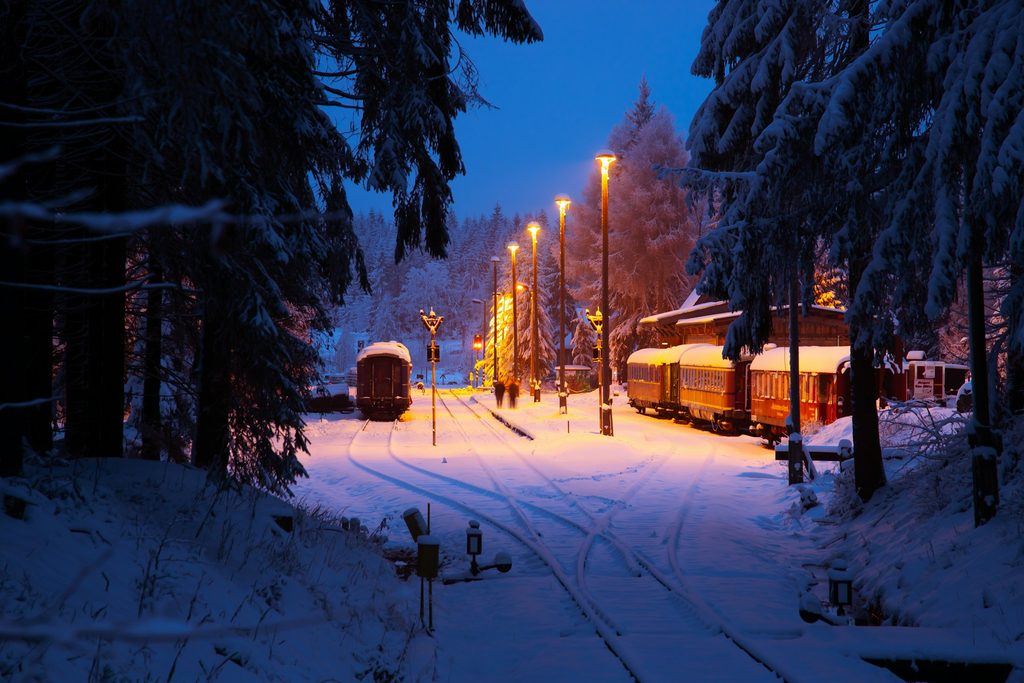
There is something about train travel in winter that feels completely different from any other season.
You are warm inside, coffee in hand, while snowy mountains, frozen lakes, pine forests and tiny villages slowly pass outside the window. There is no airport rush, no icy road to navigate and no pressure to reach the destination as quickly as possible.
The journey becomes the trip.
Europe is particularly good at this. Some railway lines cross the Alps, others climb through Norwegian mountains or disappear into Arctic forests, while a few still use steam locomotives that look as though they belong in another century.
If you are planning a winter trip and want something more memorable than another flight between European capitals, these are some of the most magical winter train journeys in Europe.
1. Bernina Express, Switzerland to Italy
Route: Chur or St. Moritz, Switzerland → Tirano, Italy
Journey time: Around 4 hours 15 minutes from St. Moritz to Tirano
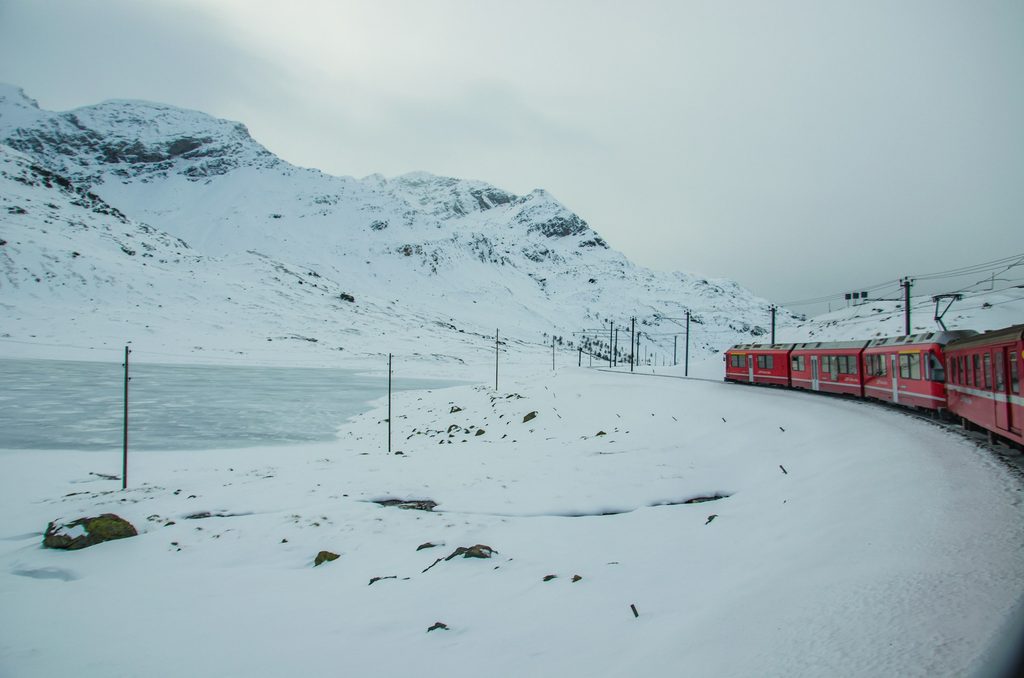
The Bernina Express is probably the first train I would choose for a European winter rail trip.
It crosses the Swiss Alps before descending dramatically toward Italy, and the change in scenery is incredible.
Leaving St. Moritz, the railway climbs through snow-covered landscapes toward the Bernina Pass, passing frozen lakes, glaciers and tiny Alpine stations before eventually descending through the Val Poschiavo toward Tirano.
The full Bernina route forms part of the UNESCO-listed Rhaetian Railway landscapes and includes extraordinary railway engineering, including dozens of tunnels and bridges. The official route runs from Chur or St. Moritz to Tirano.
Winter makes the journey particularly beautiful because the higher sections are often completely white.
One important 2026 detail: some Bernina Express services are currently being diverted via the Vereina route between October 29 and November 13, 2026, due to engineering works.
Best for: Alpine scenery, photographers and first-time scenic rail travelers.
2. Glacier Express, Switzerland
Route: Zermatt → St. Moritz
Journey time: Around 8 hours
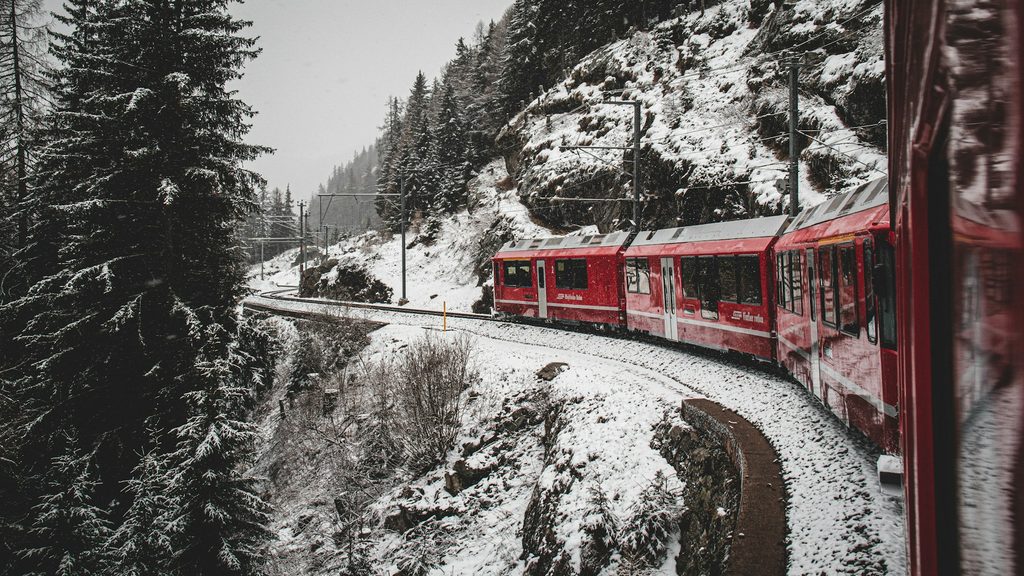
If the Bernina Express feels dramatic, the Glacier Express feels epic.
This full-day journey connects two of Switzerland’s most famous mountain resorts: Zermatt, beneath the Matterhorn, and glamorous St. Moritz.
Along the way, the train travels through the Upper Rhône Valley, Andermatt, the Oberalp Pass, the Rhine Gorge and the historic Albula railway landscapes.
The highest point is the Oberalp Pass at more than 2,000 metres above sea level, where the landscape can be buried beneath deep snow during winter. The full journey takes approximately eight hours.
This is definitely one of those trips where I would avoid planning anything else for the day. Sit down, order something to eat and simply watch Switzerland unfold outside.
For winter 2026/27, there is one important timing detail: the Glacier Express does not operate from October 11 through December 4, 2026. The winter timetable begins on December 5, 2026.
Best for: Full-day scenic journeys, couples and classic Swiss winter scenery.
3. GoldenPass Express, Switzerland
Route: Interlaken → Montreux
Journey time: Around 3 hours 15 minutes
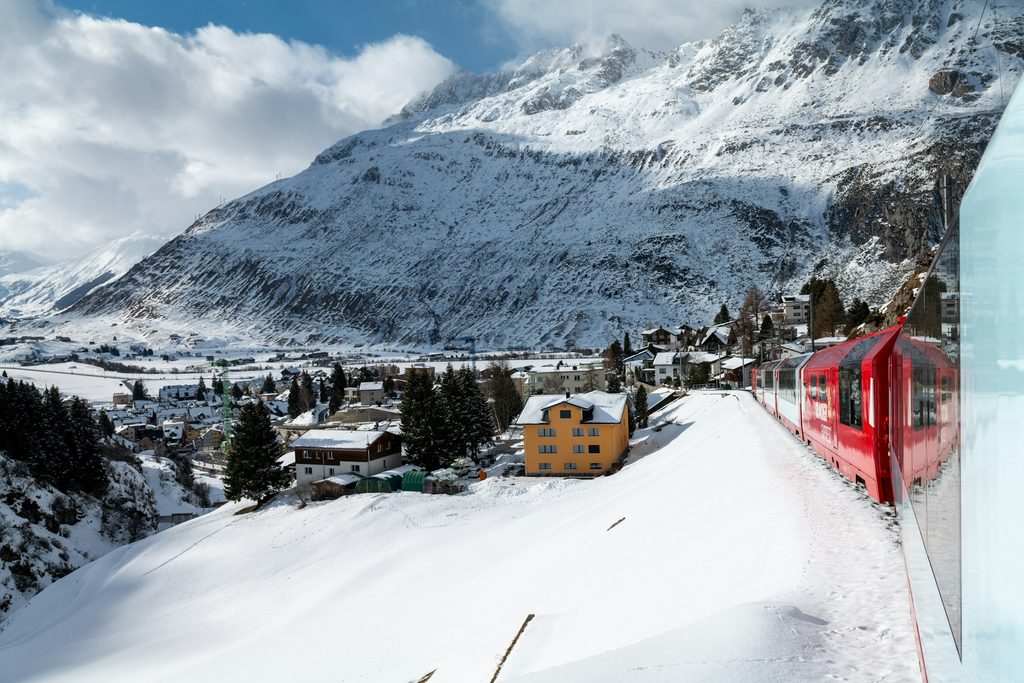
The GoldenPass Express gives you a completely different Swiss winter experience.
Instead of staying exclusively among high mountains, this journey connects the Bernese Oberland with the shores of Lake Geneva.
You can begin surrounded by snow-covered peaks near Interlaken and finish in elegant Montreux, where vineyards and Lake Geneva give the landscape a much softer character.
The constantly changing scenery is what makes this route so enjoyable. Alpine villages give way to forests, valleys and eventually the lake.
It also fits beautifully into a longer winter itinerary. You could spend a few days around Interlaken, continue to Montreux by train and then explore the Lake Geneva region.
For travelers going before mid-December 2026, note that railway works are affecting the section between Interlaken Ost and Interlaken West until December 12, 2026, with replacement buses operating on that short segment. GoldenPass Express trains continue between Interlaken West and Montreux.
Best for: Couples, multi-city Switzerland trips and varied scenery.
Articles Recommended:
- Sun Instead of Snow: The Best Warm Christmas Destinations in Europe
- Magical Snowy Villages in Europe That Feel Like a Winter Fairytale
4. Bergen Railway, Norway
Route: Oslo → Bergen
Journey time: Around 6½–7½ hours
The Bergen Railway is one of the great long-distance train journeys of northern Europe.
It connects Norway’s two largest cities while crossing the mountains and the enormous Hardangervidda plateau.
In winter, this landscape can become extraordinary.
The train climbs away from Oslo through forests and valleys before reaching high mountain terrain where stations, cabins and entire landscapes can disappear beneath snow.
Vy describes the Bergen Line as Northern Europe’s highest railway line, stretching more than 470 kilometres between Oslo and Bergen. The journey normally takes around 6½ to 7½ hours.
What I like about this route is that it is not simply a tourist train. It is a genuine intercity railway that happens to cross spectacular scenery.
Choose a daytime departure in winter if seeing the landscape is your priority.
Best for: Norway itineraries, mountain scenery and long scenic journeys.
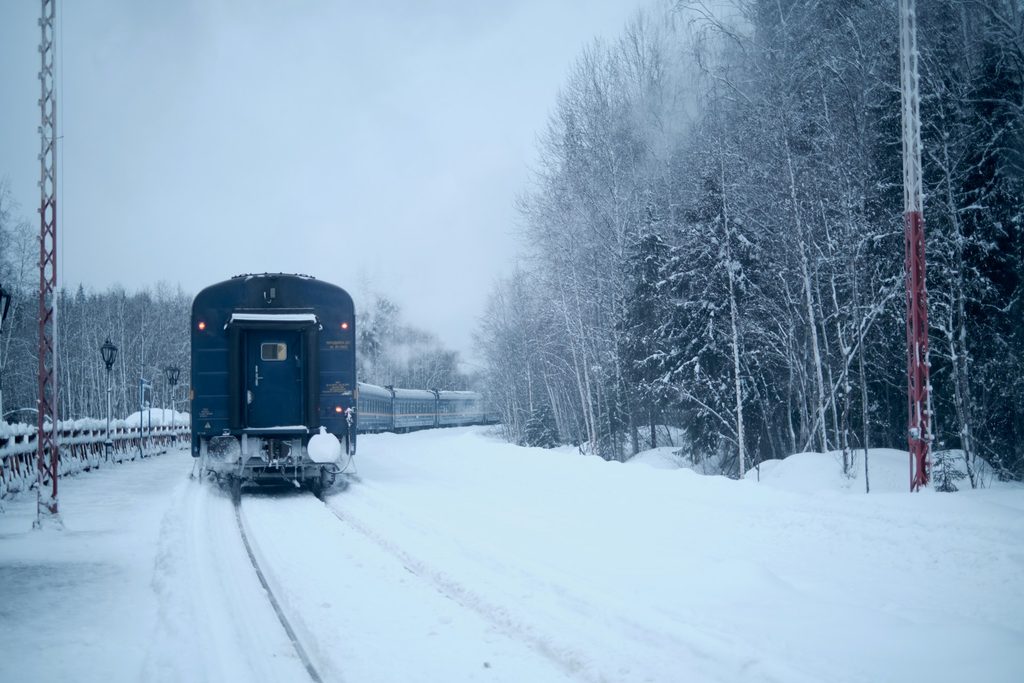
5. Flåm Railway, Norway
Route: Myrdal → Flåm
Journey time: Around 1 hour
The Flåm Railway is much shorter than the Bergen Line, but what it lacks in distance it makes up for in drama.
Over roughly 20 kilometres, the train descends from Myrdal high in the mountains to the village of Flåm beside the Aurlandsfjord.
The route passes steep mountainsides, valleys, waterfalls and tunnels while dropping more than 860 metres in elevation.
The journey itself takes about an hour, and the railway operates throughout winter. For the 2026/27 winter season, trains continue running daily, though there are fewer departures around December 24, 25 and 31.
You can also combine it with the Bergen Railway by getting off at Myrdal.
That makes it easy to build one incredible rail itinerary: Oslo → Myrdal → Flåm, followed by fjord travel or a return to the Bergen Line.
Best for: Fjords, dramatic mountain descents and shorter scenic trips.
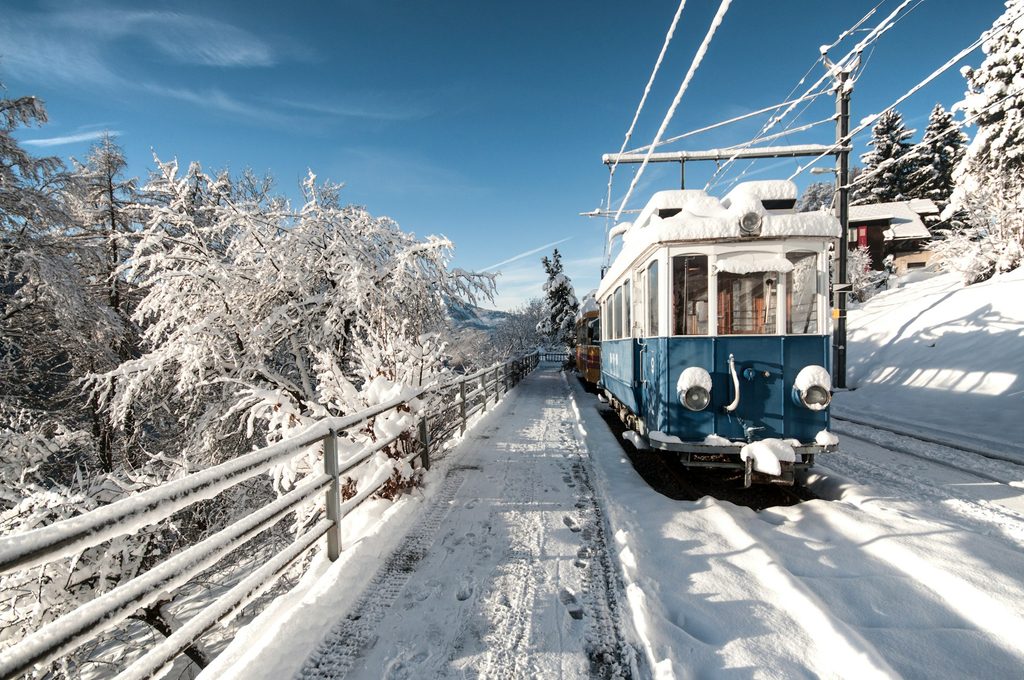
6. Santa Claus Express, Finland
Route: Helsinki → Rovaniemi
Journey time: Overnight
This might be the most appropriately named winter train in Europe.
The Santa Claus Express is an overnight train connecting Helsinki with Finnish Lapland, including Rovaniemi.
Instead of spending an entire day watching the landscape, you board in southern Finland, settle into your cabin and wake up much farther north surrounded by snow.
Sleeper cabins are available, including some with private showers, and the train also has restaurant services. VR operates several night-train routes into Lapland, with Rovaniemi being the classic Santa Claus Express destination.
This is less about panoramic sightseeing and more about the overall experience.
There is something wonderfully old-fashioned about falling asleep as the train travels north and waking up in the Arctic.
And once you arrive, you have Lapland, snowy forests, reindeer experiences and the possibility of northern lights waiting outside.
Best for: Christmas trips, families, couples and Lapland adventures.
Articles Recommended:
7. Brocken Railway, Germany
Route: Wernigerode → Brocken summit
Journey time: Around 1 hour 40 minutes
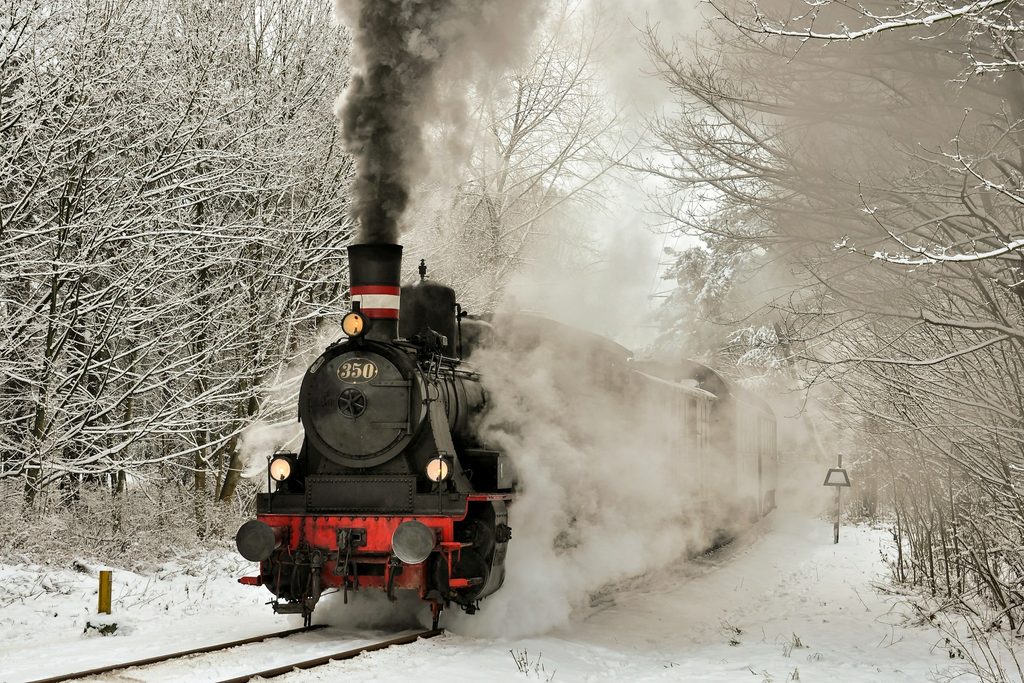
If you want your winter train journey to feel like something from a Christmas film, the Brocken Railway is hard to beat.
Historic steam trains travel through Germany’s Harz Mountains toward the summit of the Brocken.
From Wernigerode, the journey takes approximately one hour and 40 minutes, while travelers boarding at Drei Annen Hohne can reach the summit in roughly 50 minutes.
The final sections climb through forests toward the highest railway station on Germany’s narrow-gauge network.
In winter, snow-covered trees combined with steam drifting around the locomotive create an atmosphere that modern panoramic trains simply cannot replicate.
The railway has a dedicated winter timetable running from November 27, 2026 through April 4, 2027.
Best for: Nostalgia, Christmas atmosphere, families and steam-train lovers.
8. Semmering Railway, Austria
Route: Gloggnitz → Mürzzuschlag
Journey time: Roughly 1 hour across the historic mountain section
Austria’s Semmering Railway is more understated than Switzerland’s famous panoramic trains, but historically it is just as impressive.
The UNESCO-listed railway crosses approximately 41 kilometres of mountainous terrain between Gloggnitz and Mürzzuschlag.
Built in the 19th century, it uses tunnels, viaducts and dramatic curves to climb across the Semmering Pass. UNESCO describes it as one of the great pioneering achievements of early railway engineering.
In winter, the forests, villas and mountain slopes around Semmering can be covered in snow, giving the journey a classic Austrian atmosphere.
You can also experience the Semmering section as part of a longer train journey between Vienna and Graz, making it an easy scenic addition to a city-based Austrian trip.
Best for: Railway history, Austrian winter trips and travelers combining Vienna with Graz.
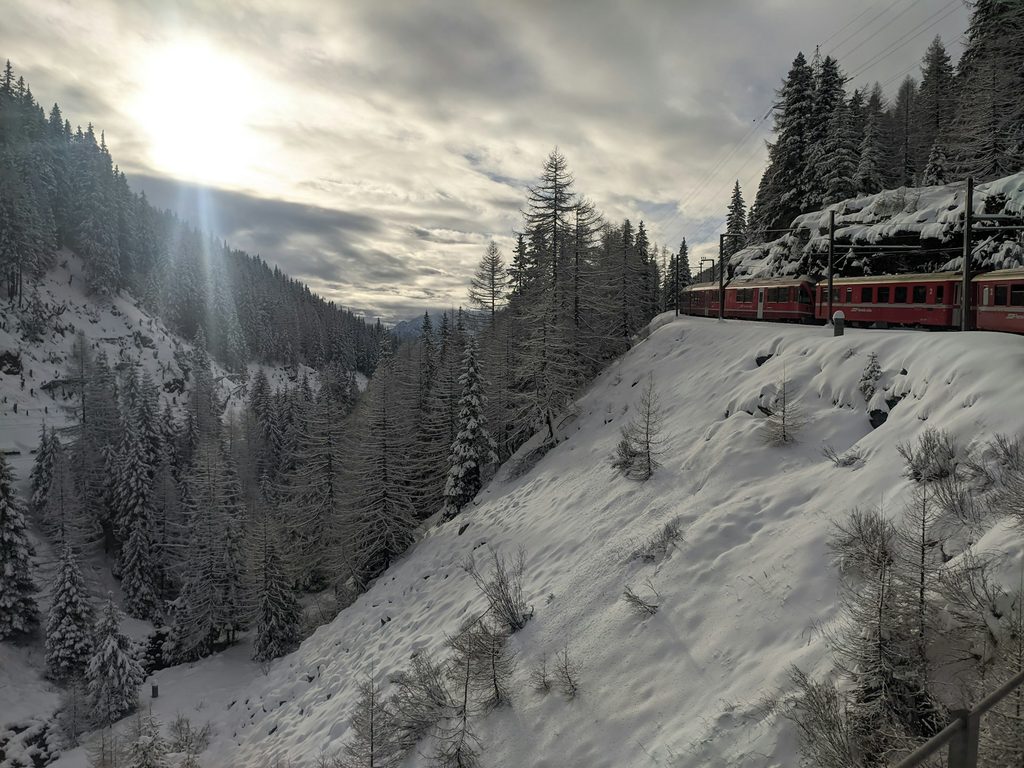
9. Centovalli Railway, Switzerland to Italy
Route: Locarno, Switzerland → Domodossola, Italy
Journey time: Around 2 hours
The Centovalli Railway feels like one of the less obvious choices on this list, which is exactly why I like it.
The approximately 52-kilometre route connects Locarno in Switzerland with Domodossola in northern Italy, passing through valleys, forests, rivers, waterfalls and small villages along the way.
The full trip takes around two hours and runs throughout the year.
Winter gives you an interesting contrast.
Higher sections can feel distinctly Alpine, while Locarno beside Lake Maggiore often has a much softer atmosphere. In the same journey, you can move between mountain scenery and Italian-speaking lake country.
It is also considerably easier to fit into an itinerary than some of the full-day scenic trains.
Best for: Switzerland–Italy itineraries, shorter scenic journeys and underrated routes.
Articles Recommended:
- Most Beautiful Small Towns in Europe to Visit in Autumn
- 10 Best European Christmas Markets to Visit in November
10. West Highland Line, Scotland
Route: Glasgow → Fort William → Mallaig
Journey time: Around 5½ hours for the full Glasgow–Mallaig journey
The West Highland Line proves that a magical winter train journey does not necessarily require the Alps.
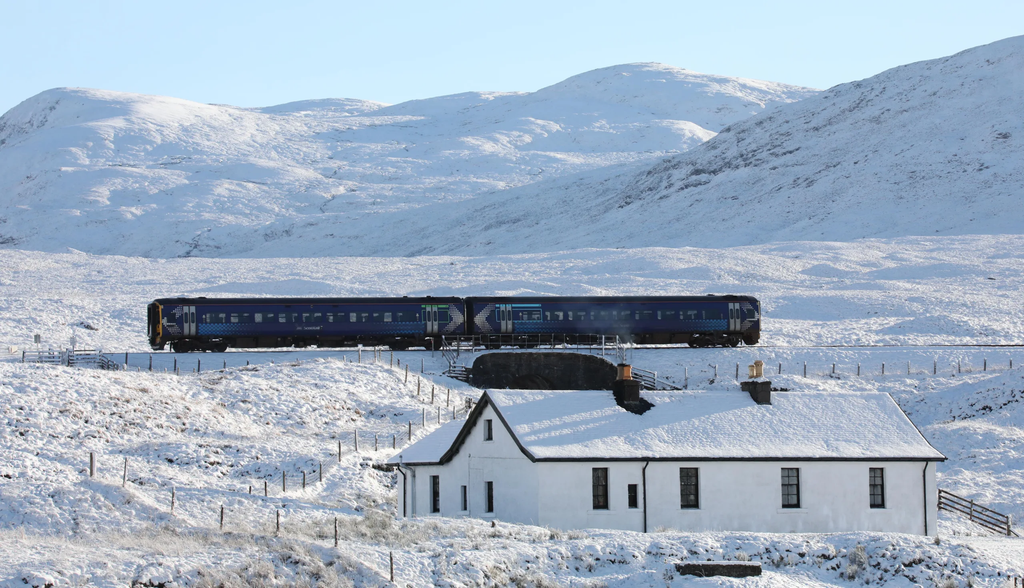
This railway heads north from Glasgow into some of Scotland’s wildest scenery, passing lochs, mountains, moorland and remote stations before eventually reaching the west coast at Mallaig.
The stretch beyond Fort William is particularly famous, passing through dramatic Highland scenery and over the Glenfinnan Viaduct.
Winter can make the route look incredibly atmospheric: mist over the lochs, snow on the peaks and huge empty landscapes outside the windows.
There is one important November 2026 travel note. Network Rail has scheduled improvement works between Crianlarich and Fort William/Mallaig from November 9–17, 2026, during which buses will replace trains on affected sections.
Outside disruption periods, this is exactly the kind of train journey where I would choose a window seat, put the phone away and enjoy Scotland moving slowly past.
Best for: Wild landscapes, Scotland road-trip alternatives and atmospheric winter scenery.
Which Winter Train Journey Should You Choose?
If this were my first scenic rail trip in Europe, I would probably start with the Bernina Express.
It gives you almost everything: snow, glaciers, high mountain passes, remarkable railway engineering and the novelty of traveling from Switzerland into Italy.
For the biggest all-day experience, choose the Glacier Express.
If you are heading to Scandinavia, the Bergen Railway is ideal for scenery, while the Santa Claus Express is more about the experience of traveling overnight into the Arctic.
For something shorter, I would choose the Flåm Railway or Centovalli Railway.
And if I wanted pure nostalgic winter atmosphere, I would take the steam-powered Brocken Railway.
Articles Recommended:
Tips for Taking Scenic Trains in Europe During Winter
Winter train travel is generally wonderfully relaxing, but I would still plan more carefully than I would in summer.
Daylight is the biggest consideration.
In northern Europe especially, winter days can be short. If the scenery is the reason you are taking the train, choose departure times that maximize daylight rather than simply booking the cheapest service.
Seat reservations also matter on trains such as the Glacier Express and Bernina Express. Some scenic services can sell out around Christmas, New Year and peak ski periods.
I would also avoid planning tight connections after long mountain journeys. Heavy snow does not automatically stop European railways, but winter weather and engineering work can still cause delays or timetable changes.
And always check the operator’s timetable shortly before travel.
A beautiful train route is much less romantic when you discover at the station that part of it is temporarily being replaced by a bus.
Final Thoughts
Some journeys are simply better when you do not rush them.
That is what I love about winter train travel in Europe.
You could fly between many of these destinations faster. You could rent a car and have more freedom. But neither gives you quite the same feeling as sitting beside a large window while snow-covered mountains, frozen valleys and tiny villages pass quietly outside.
For me, the Bernina Express and Glacier Express remain the ultimate Alpine experiences, while the Bergen Railway and Santa Claus Express offer something completely different in Scandinavia.
Then there are journeys such as the Brocken Railway, where the train itself becomes part of the magic.
If you are planning a European winter trip this year, I would seriously consider building at least one scenic railway journey into the itinerary.
Because sometimes getting from one place to another becomes the part of the trip you remember most.
Written & updated by Matteo — Travelupo
